

Puppies
Nutritional support for growing and recovering puppies
Keep puppies warm immediately — neonates cannot regulate their own body temperature. A warm water bottle wrapped in a towel works in an emergency. Contact your nearest vet or animal rescue for help.
Quick Reference
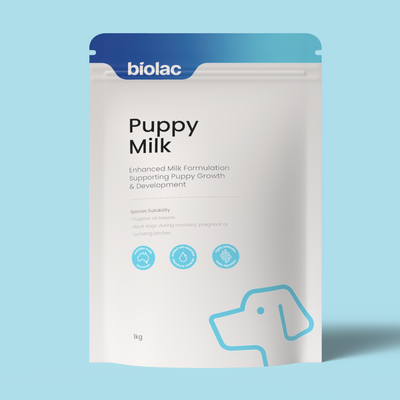
Biolac Puppy Milk is a concentrated nutritional supplement for puppies. It provides high-quality protein and energy to support growth, recovery from illness, or supplementary feeding alongside a balanced diet.
Puppy Milk
Growth & Development
Puppy development milestones are breed-dependent, but the general stages below apply to most breeds. Weight ranges vary significantly — use developmental markers rather than weight alone to guide feeding.
Neonatal
Eyes and ears closed. Unable to regulate body temperature. Requires constant warmth (30–32°C) and feeding every 2–3 hours including overnight. Stimulate toileting after each feed.
Transitional
Eyes opening (10–14 days), ears opening, beginning to stand and walk. Starting to thermoregulate. Feeding intervals can extend to every 3–4 hours.
Socialisation
Active, playful, beginning to eat softened solid food. Milk feeds reduce as solid food intake increases. Important period for socialisation with people and other dogs.
Weaning
Fully eating solid puppy food. Milk feeds winding down to 1–2 per day or ceased. Ensure access to fresh water at all times.
Care Guide
About Biolac Puppy Milk
Biolac Puppy Milk is a concentrated nutritional supplement designed to support growing and recovering puppies. It provides high-quality protein and energy for supplementary feeding, recovery from illness, or short-term orphan support.
For orphaned neonates requiring sole-source nutrition beyond 48 hours, consult your veterinarian about a complete puppy milk replacer. Biolac Puppy Milk is ideal as a supplementary feed alongside a balanced diet, or for short-term emergency feeding.
Formula Preparation
Mix 10g of powder per 50ml of pre-boiled warm water. Stir or shake well until fully dissolved. Warm to approximately 37–38°C (dog body temperature) in a water bath. Test on the inside of your wrist — it should feel warm, not hot.
Refrigerate unused formula and use within 24 hours. Do not microwave.
Feeding Tips
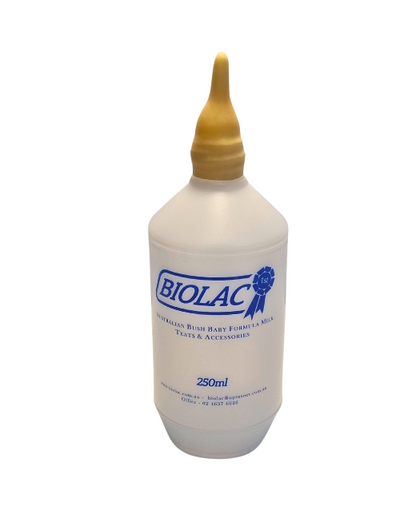
For neonatal puppies, use a small bottle with an appropriately sized teat, or a syringe for very small breeds. Hold the puppy on its stomach (never on its back) and allow it to suckle at its own pace.
Neonates need feeding every 2–3 hours around the clock, including overnight. After each feed, stimulate toileting by gently wiping the genital area with a warm, damp cloth — neonatal puppies cannot toilet on their own.
Feed volumes are approximately 10–15% of body weight per day for neonates. Weigh daily — healthy puppies should gain weight steadily. Failure to gain weight requires veterinary attention.
Introducing Solid Food
Begin introducing softened puppy food from around 3–4 weeks of age. Mix a high-quality puppy food with warm water to create a slurry and offer 2–3 times daily alongside milk feeds.
Gradually thicken the consistency and reduce milk feeds over 1–2 weeks as the puppy eats more solid food. By 6–8 weeks, puppies should be eating solid food independently. Ensure access to fresh water at all times.
Transitioning Between Formulas
As puppies begin eating solid food (usually around 3–4 weeks), gradually reduce milk feeds. Start by offering softened puppy food 2–3 times daily alongside milk feeds, then reduce milk volume over 1–2 weeks as solid food intake increases.
Important Notes
Regular cows milk causes diarrhoea in most puppies due to lactose intolerance. Use only a puppy-specific formula. Goats milk is also not recommended as a sole-source diet.
Not sure which formula?
Our Product Advisor helps you find the right Biolac formula based on your animal's species and weight.